
Casino Affiliate Compliance: Avoiding Legal Pitfalls

Most American online casino affiliates know that a single compliance misstep can result in fines that exceed six figures. With the global push for stricter gambling regulations, knowing the rules is no longer optional, especially as countries like the United Kingdom and Malta increase oversight. This article offers actionable insights for experienced affiliates and marketers who want to strengthen their compliance strategies, navigate complex regional requirements, and protect both revenue and reputation in a rapidly changing market.
Table of Contents
Key Takeaways
| Point | Details |
| Adhere to Regional Regulations | Affiliates must understand and comply with licensing requirements specific to each jurisdiction to avoid legal penalties. |
| Maintain Content Transparency | Clear and accurate marketing information is crucial for ethical practices, including responsible gambling messaging. |
| Implement Robust KYC and AML Procedures | Strong verification processes are necessary to prevent underage gambling and to ensure financial compliance. |
| Conduct Regular Compliance Audits | Periodic reviews of marketing practices and legal documentation can help identify vulnerabilities and prevent non-compliance. |
Casino Affiliate Compliance Fundamentals Defined
Navigating the complex world of casino affiliate marketing requires understanding fundamental compliance principles that protect both operators and affiliates from legal risks. Compliance in this context represents a comprehensive framework of regulatory standards, ethical practices, and operational guidelines designed to ensure transparent and responsible gambling promotions.
Key compliance fundamentals encompass several critical dimensions. First, affiliates must strictly adhere to licensing requirements specific to each jurisdiction where they operate. This means understanding and implementing region-specific regulations that govern online gambling advertising, marketing practices, and promotional strategies. Common iGaming affiliate mistakes often stem from inadequate research into local legal frameworks, which can result in significant financial penalties and potential marketing restrictions.
Another crucial aspect involves maintaining rigorous standards around content authenticity and transparency. Affiliates should provide clear, accurate information about casino offers, avoid misleading promotional tactics, and implement responsible gambling messaging. This includes displaying appropriate age restrictions, highlighting potential gambling risks, and including links to problem gambling resources. Operators increasingly demand affiliates demonstrate a commitment to ethical marketing practices that prioritize player protection over aggressive conversion tactics.
Pro Expert Tip: Develop a comprehensive compliance checklist that includes jurisdiction-specific regulations, marketing guidelines, and verification processes for each casino partnership to minimize potential legal risks and maintain professional credibility.
Regional Regulatory Frameworks and Licensing Standards
The landscape of regional regulatory frameworks in casino affiliate marketing represents a complex and dynamic ecosystem of legal requirements that demand meticulous understanding and strategic navigation. Different geographic regions maintain distinct regulatory approaches, creating a challenging environment where affiliates must demonstrate sophisticated compliance capabilities across multiple jurisdictions.

Understanding licensing standards requires a granular approach to regional variations. European markets like the United Kingdom, Malta, and Gibraltar maintain stringent regulatory frameworks with comprehensive background checks and detailed operational requirements. Role of Affiliate Networks in Casinos become critically important in helping affiliates understand these intricate regulatory landscapes. North American markets present additional complexity, with individual states like New Jersey and Pennsylvania implementing unique licensing protocols that demand specialized knowledge and adaptive marketing strategies.
Successful compliance strategies involve developing comprehensive documentation processes that track regulatory shifts across different markets. Affiliates must establish robust internal systems that can rapidly adapt to changing legal requirements, including age verification protocols, responsible gambling guidelines, and transparent marketing practices. This involves maintaining detailed records of licensing credentials, conducting periodic legal audits, and implementing flexible marketing approaches that can be quickly modified to meet emerging regulatory standards.
Pro Expert Tip: Create a dynamic regulatory tracking system that includes automated alerts for legal changes in each target market, enabling proactive adaptation to new licensing requirements and minimizing potential compliance risks.
Here’s a reference table that highlights regional differences in casino affiliate regulatory frameworks:
| Region | Licensing Complexity | Key Requirements | Common Challenges |
| United Kingdom | Very high | Detailed background checks | Frequent regulatory updates |
| Malta | High | Operational transparency needed | Maintaining compliant documentation |
| Gibraltar | High | Strict due diligence on affiliates | Adapting to evolving standards |
| New Jersey | Moderate to high | State-specific marketing protocols | Adjusting to patchwork regulations |
| Pennsylvania | Moderate to high | Unique promotional restrictions | Rapid compliance with state laws |
| Asia-Pacific | Increasingly stringent | Enhanced AML oversight | Adapting to stronger enforcement |
KYC, AML, and Responsible Gambling Requirements
Navigating the complex landscape of Know Your Customer (KYC), Anti-Money Laundering (AML), and responsible gambling requirements represents a critical compliance challenge for casino affiliates operating in the global digital gambling ecosystem. These interconnected regulatory frameworks demand sophisticated operational strategies that protect both financial institutions and individual players from potential risks associated with online gambling activities.
KYC protocols require affiliates to implement rigorous verification processes that definitively establish player identity, age, and geographic location. This involves collecting and validating government-issued identification, verifying residential addresses, and conducting comprehensive background checks to prevent underage gambling and unauthorized market access. Role of Trusted Casino Brands becomes instrumental in maintaining these stringent verification standards, ensuring that only legitimate players gain access to gambling platforms.
AML requirements represent another critical dimension of regulatory compliance, focusing on preventing financial crimes such as money laundering and terrorist financing through gambling platforms. Affiliates must develop advanced monitoring systems that track unusual transaction patterns, implement robust reporting mechanisms for suspicious activities, and maintain detailed documentation of financial interactions. The Asia-Pacific region has demonstrated increasing regulatory scrutiny, with enhanced enforcement activities targeting potential financial crime risks within the gambling sector, signaling a global trend toward more comprehensive financial oversight.
Pro Expert Tip: Develop a comprehensive digital compliance workflow that integrates automated KYC verification, real-time transaction monitoring, and automated reporting tools to streamline regulatory adherence and minimize potential legal vulnerabilities.
Here is a summary of the major compliance areas and their business impacts for casino affiliates:
| Compliance Area | Main Focus | Business Impact |
| KYC Verification | Confirm player identity/age | Reduces legal risk, builds trust |
| AML Compliance | Monitor and report suspicious | Prevents fines, protects brand |
| Responsible Gambling | Promote safe gambling | Improves player loyalty |
| Marketing Transparency | Disclose affiliate ties | Enhances reputation, avoids bans |
| Licensing Adherence | Meet jurisdiction rules | Secures market access |
Affiliate Marketing Transparency and Ad Practices
The landscape of affiliate marketing transparency in online gambling demands a nuanced approach that balances promotional effectiveness with ethical disclosure practices. Regulators and consumers increasingly expect clear, unambiguous communication about the commercial nature of affiliate content, driving a critical need for comprehensive and honest marketing strategies.
Empirical research highlights significant challenges in marketing disclosure. A comprehensive study examining affiliate marketing content across digital platforms revealed that merely 10% of affiliate marketing materials contained adequate disclosures, underscoring the widespread lack of transparency in the industry. Promoting Online Casinos becomes particularly crucial in addressing these disclosure gaps, emphasizing the importance of clear communication about financial relationships between affiliates and gambling platforms.
Effective ad practices require affiliates to implement robust disclosure mechanisms across all marketing channels. This involves developing clear visual indicators that distinguish promotional content, using explicit language about commercial relationships, and ensuring that disclosures are prominently displayed and easily understood by audiences. Transparency goes beyond simple disclaimers, requiring a comprehensive approach that builds trust through genuine, informative content that provides real value to potential players while openly acknowledging the affiliate’s financial motivations.
Pro Expert Tip: Create a standardized disclosure template that can be consistently applied across all marketing channels, including social media, blogs, and video content, ensuring uniform and transparent communication about affiliate relationships.
Risk Mitigation, Penalties, and Common Compliance Errors
Risk management in casino affiliate marketing represents a complex landscape where strategic prevention can mean the difference between sustainable success and catastrophic financial consequences. Affiliates must develop comprehensive approaches that anticipate potential regulatory challenges and proactively address compliance vulnerabilities before they escalate into significant legal or financial problems.
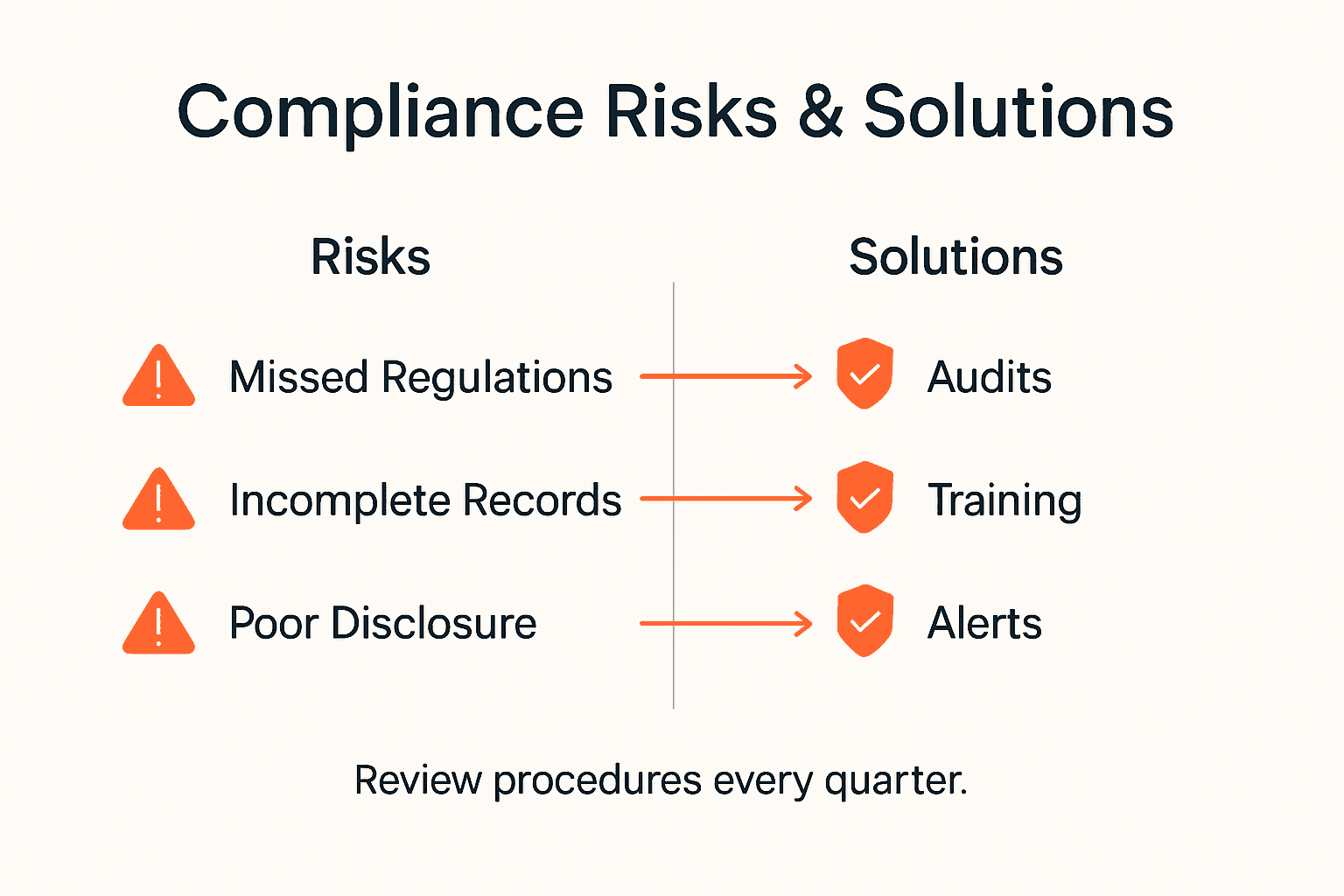
Common compliance errors often stem from inadequate understanding of jurisdictional requirements and insufficient documentation practices. iGaming Affiliate Metrics become instrumental in identifying potential risk areas by providing detailed tracking and performance analytics that can highlight potential compliance weak points. These errors typically include insufficient age verification processes, unclear marketing disclosures, improper handling of player data, and failure to implement robust responsible gambling protocols.
Penalties for non-compliance can be extraordinarily severe, ranging from substantial financial fines to complete revocation of operational licenses. Regulatory bodies increasingly employ sophisticated monitoring systems that can quickly identify and penalize affiliates who fail to meet stringent regulatory standards. Potential consequences may include monetary sanctions, legal proceedings, permanent exclusion from specific markets, and significant reputational damage that can undermine an affiliate’s entire business infrastructure.
Pro Expert Tip: Implement a quarterly comprehensive compliance audit that systematically reviews all marketing materials, documentation processes, and regulatory adherence, utilizing external compliance experts to provide an objective assessment of potential vulnerabilities.
Strengthen Your Casino Affiliate Compliance With Revillion Partners
Navigating the complex compliance landscape of casino affiliate marketing means addressing key challenges like KYC verification, AML regulations, and transparent marketing disclosures. These issues can create significant legal risks and damage your professional reputation if not handled correctly. With the pressure of regional licensing standards and the need to implement responsible gambling practices, affiliates must act swiftly to protect their business and maximize revenue potential.
Revillion Partners offers a trusted iGaming affiliate network platform that helps you meet these compliance demands with ease. Benefit from our network’s secure tracking technology, real-time analytics, and optimized social media tools designed to support your promotion of licensed, premium casino brands worldwide. Whether you target European, North American, or Asia-Pacific markets, our platform equips you with the tools to stay compliant while driving high CPA commissions and refined traffic conversions.
Ready to navigate legal pitfalls while boosting your affiliate success? Join Revillion Partners today and access advanced campaign support, dependable reporting, and dedicated compliance resources. Start securing your affiliate future at Revillion Partners and learn how the Role of Trusted Casino Brands and Role of Affiliate Networks in Casinos can elevate your compliance and earnings.
Frequently Asked Questions
What are the key compliance fundamentals for casino affiliates?
Key compliance fundamentals for casino affiliates include adhering to licensing requirements, maintaining content authenticity, implementing responsible gambling messaging, and ensuring transparency in marketing practices.
How can casino affiliates ensure they are compliant with regional regulations?
Casino affiliates can ensure compliance by establishing comprehensive documentation processes, tracking regulatory changes, and creating a dynamic regulatory tracking system with automated alerts for legal updates.
What are the potential penalties for non-compliance in casino affiliate marketing?
Penalties for non-compliance can include substantial financial fines, legal proceedings, permanent exclusion from certain markets, and significant reputational damage that can impact the affiliate’s business sustainability.
Why is marketing transparency important for casino affiliates?
Marketing transparency is essential because it builds trust with consumers, enhances the affiliate’s reputation, and helps to avoid regulatory scrutiny by ensuring clear communication about financial relationships between affiliates and gambling platforms.